Portfolio

Proof of complete business-system thinking.

These projects demonstrate how OCBS thinks about source data, workflow tools, reporting, ownership, and maintainability. Demo and conceptual projects are labeled honestly so they are not mistaken for paid client work.

Completed demo

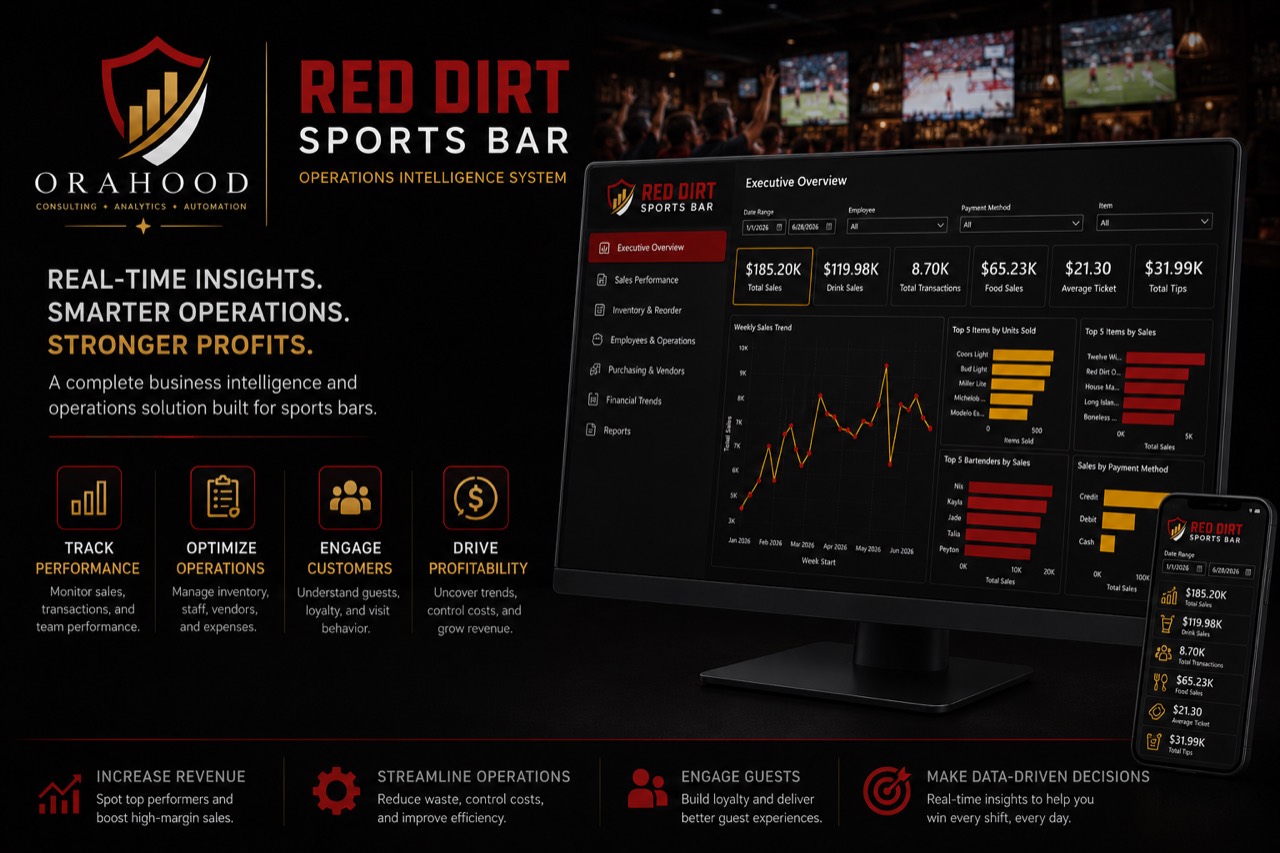
Red Dirt Sports Bar

A complete synthetic hospitality operations system with a local desktop app, SQLite operating database, Power BI reporting suite, screenshots, and walkthrough video.

  • Fictional business and synthetic dataset
  • Database, application, and dashboard layers
  • Complete case-study evidence below
View case study
Active development

Ember & Oak Cigar Lounge

An active portfolio build intended to demonstrate inventory, membership, purchasing, lounge operations, and owner reporting for a fictional cigar-lounge business.

  • Fictional business concept
  • Source workbook exists; public screenshots are not ready
  • Status will change only when working evidence is complete
Planned concept

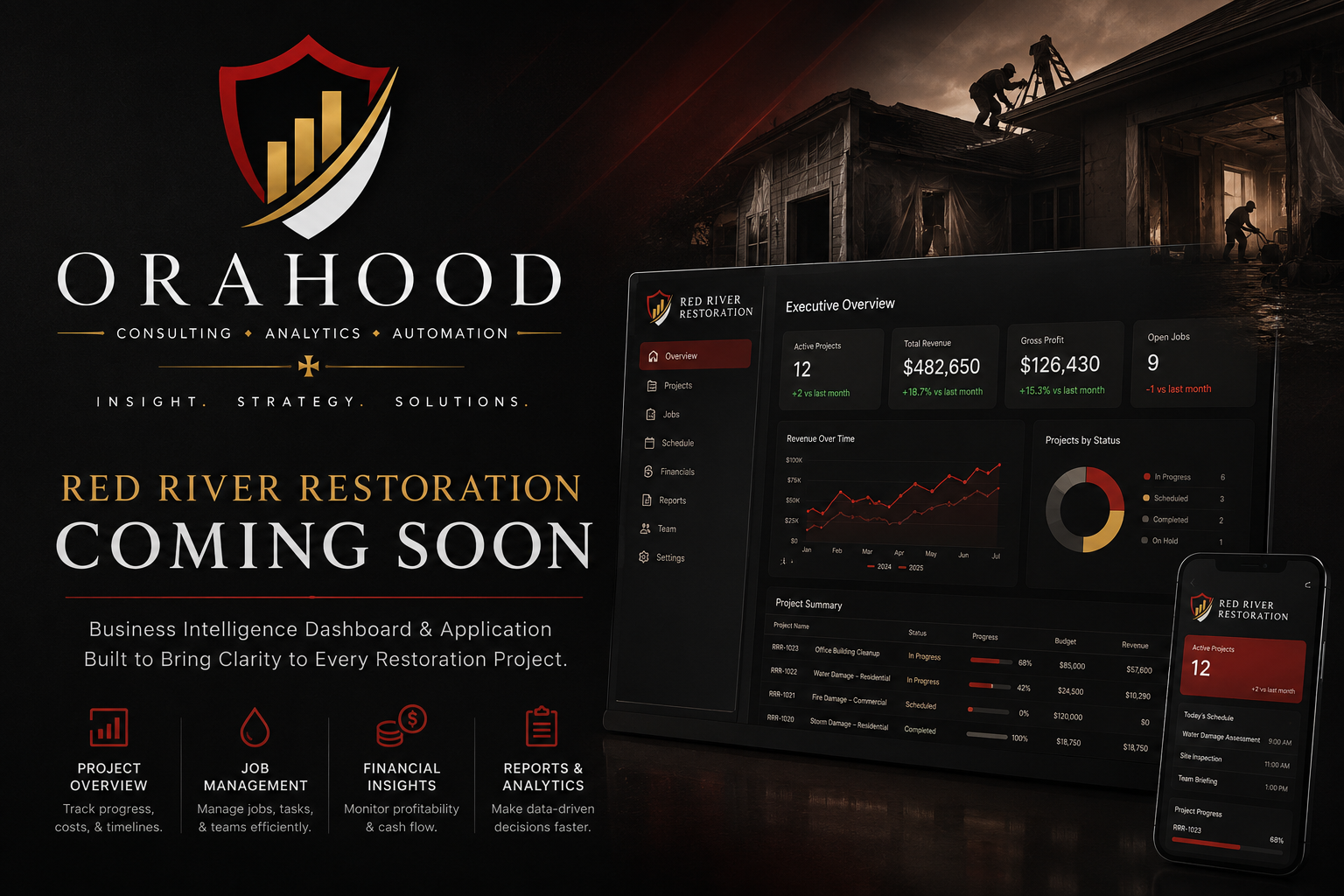
Red River Restoration

A planned restoration and field-service operations concept intended to show estimating, jobs, materials, scheduling, and reporting workflows after development begins.

  • Planned synthetic demonstration
  • No completed screenshots or public system yet
  • Included to show roadmap direction without overclaiming
Completed synthetic demo

Red Dirt Sports Bar Operations System

A complete local business-management and reporting ecosystem built for a fictional sports bar using a realistic synthetic dataset. The project combines a Python desktop application, a relational SQLite operational database, and a seven-page Power BI reporting suite.

Synthetic portfolio dataset. No real customer or employee information is used.

Project summary

One connected operating system.

Industry
Hospitality / Sports Bar
Architecture
Tkinter application -> SQLite operational database -> Power BI reporting suite
Primary tools
Python, Tkinter, ttk, SQLite, SQL, Power BI, DAX
Deployment model
Local-first
Purpose
Transaction entry, inventory, menu recipes, purchasing, employee records, backups, exports, and operational reporting
Case-study fields

What is complete, what is synthetic, and what the project proves.

Status
Completed synthetic demo
Disclosure
Fictional business; no real customer or employee information.
Source data
Five-year synthetic hospitality operations dataset.
Database
SQLite operating model with verified tables, records, and integrity checks.
Application
Local desktop workflow for transactions, inventory, menu, purchasing, employees, backups, and exports.
Reporting
Seven-page Power BI suite for executive, product, inventory, employee, purchasing, movement, and financial views.
Business value
Demonstrates how a small business can connect daily workflow to reliable reporting without unnecessary cloud dependency.
Limitations
Portfolio demonstration only; not a paid deployment, support contract, or live production system.
Future development
Future portfolio work may refine packaging, installation, support documentation, and reusable product patterns after repeated demand.
Product position

A portfolio case study shaped like a product a business could buy.

Red Dirt is fictional, but the system is presented the way a real small-business operations product should be evaluated: by workflow fit, data structure, reporting usefulness, maintainability, and the quality of the buyer-facing evidence.

01

Operational software

A local desktop app handles the workflows managers would repeat every day.

02

Auditable data layer

The SQLite model keeps the operational record inspectable and portable.

03

Decision reporting

Power BI pages turn the same business story into executive and operational views.

Business problem

A bar needs reliable day-to-day control before reporting can be useful.

Operational entry

Food and drink sales, tips, payment methods, and employees need a structured workflow instead of disconnected spreadsheets.

Inventory visibility

Recipe usage, stock levels, reorder thresholds, purchase receipts, and adjustments need to stay tied to the same operational record.

Local reporting

Managers need executive and operational reporting without sending a fictional portfolio database into cloud infrastructure.

System architecture

From daily entry to useful decisions.

The system keeps operational work straightforward and reporting connected, without adding cloud infrastructure where it is not needed.

01

Tkinter Desktop App

Local data entry and management.

02

SQLite Database

Structured operational records.

03

Power BI Reporting Suite

Reporting, trends, and analysis.

The desktop application uses the corrected operational database, while the Power BI project remains connected to a separate raw reporting copy. That separation keeps the portfolio demonstration safe and repeatable.

The design avoids unnecessary cloud dependency and demonstrates how a local workflow can support both data entry and reporting.

Project scale

Five years of structured operating data.

Metrics below are verified directly from the SQLite operational database used by the desktop application.

Transaction date range
2021-07-01 to 2026-06-30
Transactions
81,654
Line items
141,377
Inventory items
125
Menu items
100
Inventory ledger rows
27,508
Purchase orders
1,504
Database tables
15
Python desktop app

Operational workflow

Dashboard, transaction entry, inventory, menu, purchasing, employee, backup, integrity, and export tools in one local app.

SQLite database

Inspectable operating model

Verified table counts, schema structure, key relationships, and recent records are summarized from the real local database.

Power BI dashboard

Executive-ready reporting

The report file is presented as a polished product surface, while preserving the actual dashboard values and layout.

SQLite data product

A local database that makes the operating system inspectable.

The SQLite layer is structured for day-to-day operations and reporting. The public visual is generated from the real database so business readers can understand the model without opening a developer tool.

  • Source-backed database overview generated from red_dirt_operations.db
  • 15 business tables with verified row counts and schema coverage
  • Money stored consistently in cents; integrity checks pass
Local application

Red Dirt Operations Manager

A Python and Tkinter desktop application provides a practical front end for the SQLite operational database. It supports daily management workflows while keeping reporting separate in Power BI.

Completed features include dashboard KPIs, transaction entry, recipe-based inventory deduction, inventory adjustments, menu and price history management, vendors, purchase orders, employees, backups, integrity checks, and CSV exports.

Video demonstration

Project Walkthrough

A music-backed walkthrough demonstrates the desktop application, the source-backed SQLite model, and the Power BI reporting layer without fake narration or external caption tracks.

Read video transcript
  1. Red Dirt Sports Bar Operations System combines a Python desktop application, an SQLite operational database, and a Power BI reporting suite.
  2. The dashboard opens on the latest available business date, with sales, transactions, average ticket, active inventory, low stock, and recent purchase orders visible from the live database.
  3. Transaction entry is designed like a focused point-of-sale workflow. Staff can choose an employee, search menu items, build a cart, review tax and tip, and confirm the final total.
  4. Inventory management brings search, category filters, low-stock visibility, reorder thresholds, item details, and ledger-backed adjustment controls into one local screen.
  5. Menu and recipe tools connect prices, active status, ingredients, and inventory usage, so reporting and stock movement stay tied to the same operational model.
  6. Purchasing tracks vendors, purchase orders, order status, item quantities, receipt workflow, and order totals without moving the workflow into cloud software.
  7. Employee records support the transaction workflow while keeping active status and role information available for operations reporting.
  8. The SQLite database is the local source of truth for transactions, line items, inventory, recipes, vendors, purchase orders, employees, events, and operational exceptions.
  9. The Power BI report uses a separate reporting copy for portfolio safety, turning the operating records into executive, product, inventory, employee, purchasing, movement, and financial views.
  10. The system screen exposes practical local tools: connection status, database information, backups, integrity checks, foreign-key checks, and CSV exports.
  11. The architecture stays intentionally simple: Tkinter for daily operations, SQLite for local structured data, and Power BI for management reporting.
  12. OCBS builds local systems, custom business workflows, and operational reporting around how a business actually works.
Technology

Technologies Used

  • Python
  • Tkinter
  • ttk
  • SQLite
  • SQL
  • Power BI
  • DAX
  • Git
  • GitHub
  • HTML
  • CSS
  • JavaScript

Need a system built around your business?

Orahood Custom Business Solutions develops practical reporting, automation, database, and analytics tools designed around the way an organization actually operates.