Operational software
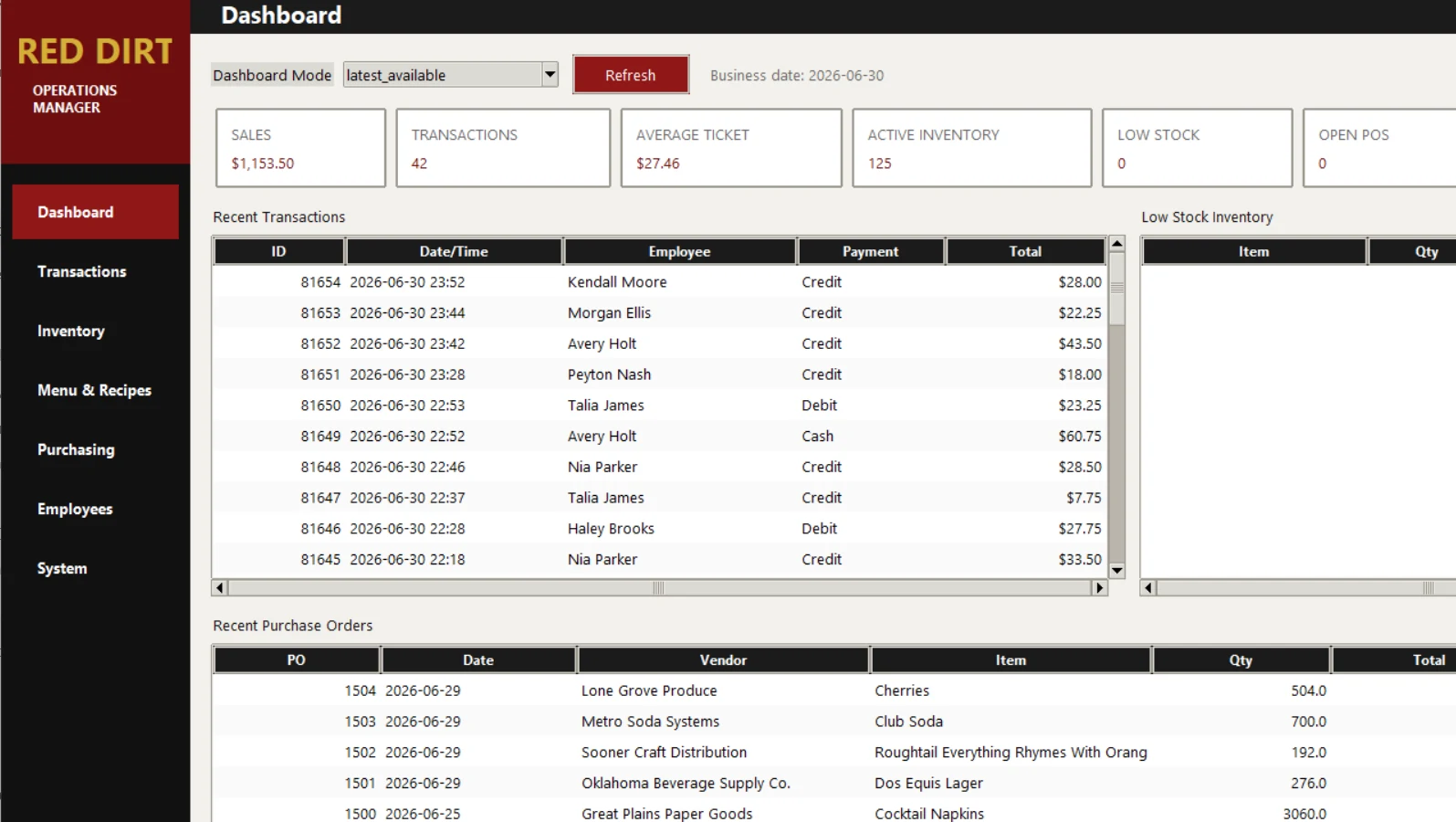
A local desktop app handles the workflows managers would repeat every day.
A complete local business-management and reporting ecosystem built for a fictional sports bar using a realistic synthetic dataset. The project combines a Python desktop application, a relational SQLite operational database, and a seven-page Power BI reporting suite.
Synthetic portfolio dataset. No real customer or employee information is used.
Red Dirt is fictional, but the system is presented the way a real small-business operations product should be evaluated: by workflow fit, data structure, reporting usefulness, maintainability, and the quality of the buyer-facing evidence.
A local desktop app handles the workflows managers would repeat every day.
The SQLite model keeps the operational record inspectable and portable.
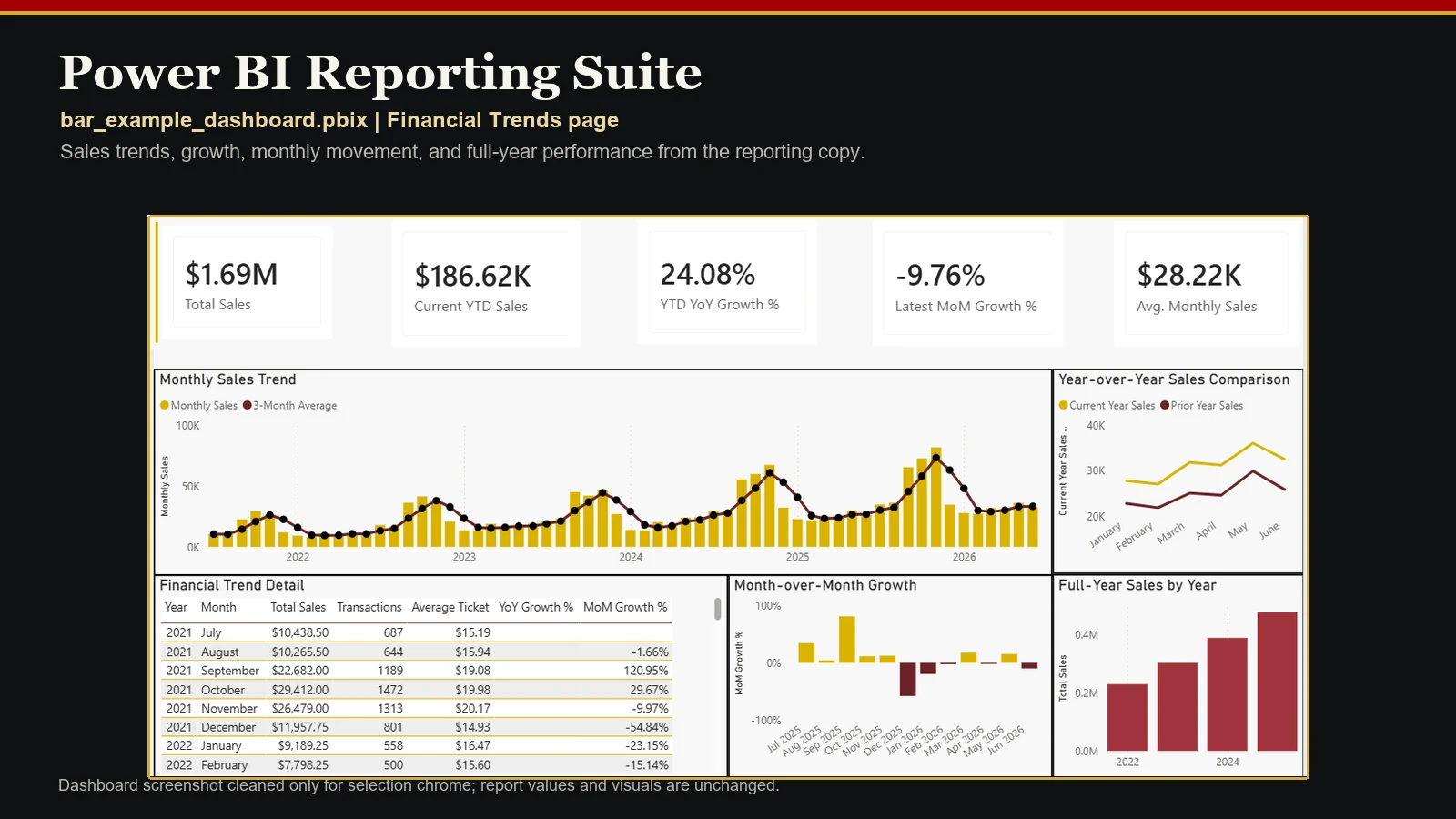
Power BI pages turn the same business story into executive and operational views.
Food and drink sales, tips, payment methods, and employees need a structured workflow instead of disconnected spreadsheets.
Recipe usage, stock levels, reorder thresholds, purchase receipts, and adjustments need to stay tied to the same operational record.
Managers need executive and operational reporting without sending a fictional portfolio database into cloud infrastructure.
The system keeps operational work straightforward and reporting connected, without adding cloud infrastructure where it is not needed.
Local data entry and management.
Structured operational records.
Reporting, trends, and analysis.
The desktop application uses the corrected operational database, while the Power BI project remains connected to a separate raw reporting copy. That separation keeps the portfolio demonstration safe and repeatable.
The design avoids unnecessary cloud dependency and demonstrates how a local workflow can support both data entry and reporting.
Metrics below are verified directly from the SQLite operational database used by the desktop application.
Dashboard, transaction entry, inventory, menu, purchasing, employee, backup, integrity, and export tools in one local app.
Verified table counts, schema structure, key relationships, and recent records are summarized from the real local database.
The report file is presented as a polished product surface, while preserving the actual dashboard values and layout.
The SQLite layer is structured for day-to-day operations and reporting. The public visual is generated from the real database so business readers can understand the model without opening a developer tool.
The reporting layer translates the operating model into executive, product, inventory, vendor, employee, and financial views. The dashboard assets are treated as product evidence, not decorative screenshots.
A Python and Tkinter desktop application provides a practical front end for the SQLite operational database. It supports daily management workflows while keeping reporting separate in Power BI.
Completed features include dashboard KPIs, transaction entry, recipe-based inventory deduction, inventory adjustments, menu and price history management, vendors, purchase orders, employees, backups, integrity checks, and CSV exports.
Real screens from the completed Red Dirt Operations Manager, connected to the SQLite portfolio database and showing finished operational workflows.
A music-backed walkthrough demonstrates the desktop application, the source-backed SQLite model, and the Power BI reporting layer without fake narration or external caption tracks.
Orahood Custom Business Solutions develops practical reporting, automation, database, and analytics tools designed around the way an organization actually operates.